The court of honor is the heart of a quinceañera — the friends and family who stand beside the birthday girl through the ceremony, the waltz, and the party. It's also the source of most planning questions (and most drama). Here's how the court works, role by role.
How Many Damas and Chambelanes Are in a Quinceañera?
The traditional full court is 14 damas and 14 chambelanes — one pair for each year of the quinceañera's life, with the birthday girl herself completing the count of 15. In practice, most modern courts are smaller: 7 pairs, 5 pairs, or even just chambelanes with no damas are all common today. There is no wrong number — the court should be the people who genuinely matter to the quinceañera, not bodies recruited to hit fourteen. A smaller court also means fewer dresses to match, fewer rehearsals to wrangle, and a tighter waltz.
What Do Damas and Chambelanes Actually Do?
- Damas — the young women of the court — accompany the quinceañera at the Mass and reception, dance the choreographed numbers, and wear coordinating dresses chosen by the birthday girl
- Chambelanes — the young men — escort the damas, participate in the waltz and surprise dance, and traditionally wear matching suits or tuxes
- The chambelán de honor is the quinceañera's principal escort — often a close friend, cousin, or boyfriend — who dances the first waltz with her
- The full court performs the vals (formal waltz) and usually a baile sorpresa (surprise dance) — expect 6-10 rehearsals in the months before
How to Choose Your Court (Without the Drama)
Choose people who will actually show up — to rehearsals, not just the party. Mixing family and friends protects the guest list from shifting friendships between the ask and the event (courts are often chosen 8-12 months out). Set expectations upfront about costs: who pays for dresses and suits varies by family, and saying it clearly at the start prevents the most common court conflict. And build in one or two alternates mentally; someone always moves, gets grounded, or drops out.
What the Court Does at the Reception
The court enters before the quinceañera's grand entrance, forms the arc for her presentation, and anchors the two choreographed dances. After the formal program — the waltz, the traditional ceremonies like the changing of the shoes and the last doll, and the toast — the court's job is simply to keep the dance floor alive. A venue that knows quinceañeras will stage the entrances, cue the music transitions, and give the court a place to regroup before the surprise dance.
A Quinceañera Venue That Knows the Traditions
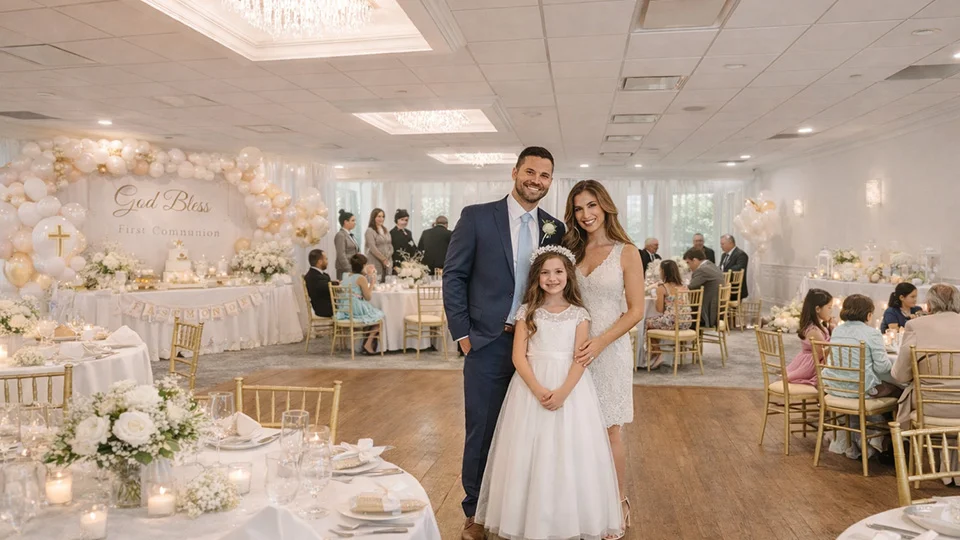
Branches Events in West Long Branch hosts quinceañeras with room for a full 14-pair court — a ballroom with a real dance floor for the vals, staging for the grand entrance, and a team that has cued more surprise dances than any DJ in Monmouth County. Bilingual planning support is available, y nuestra página en español está disponible aquí.