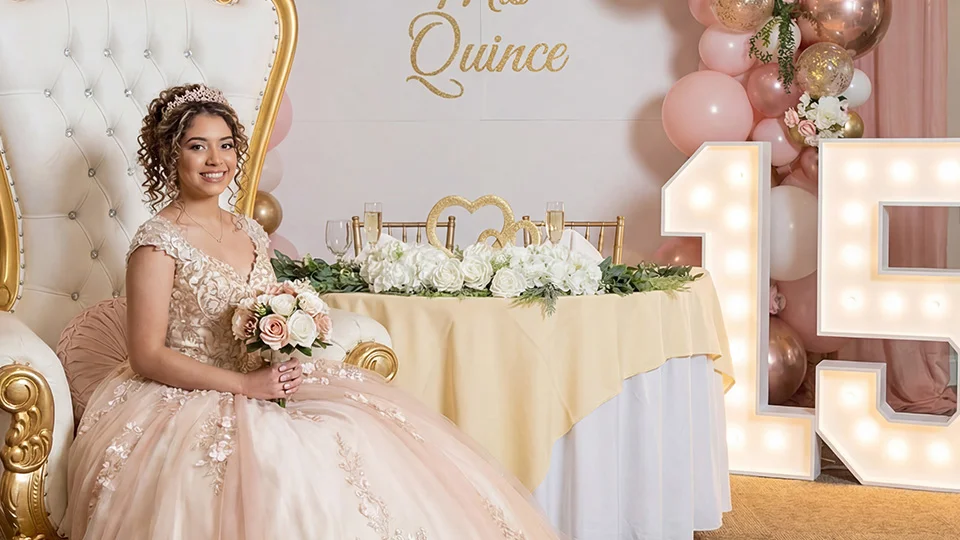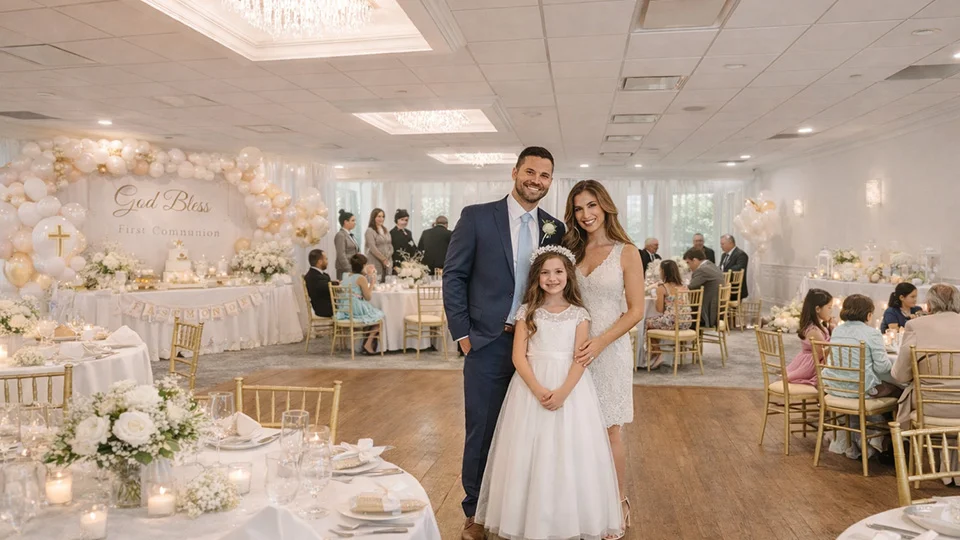
A quinceañera marks a girl's transition from childhood to young womanhood on her 15th birthday. Rooted in Latin American culture, this celebration combines religious elements, family traditions, and joyful festivity. Whether you're planning your first quinceañera or want to honor traditions passed down through generations, this guide explains the meaningful customs that make these celebrations so special.
The Religious Ceremony
Many quinceañeras begin with a Misa de Acción de Gracias (Thanksgiving Mass) at the family's church. The quinceañera renews her baptismal vows, gives thanks for her life so far, and asks for blessings for the years ahead. This spiritual foundation reminds everyone that the celebration is about more than a party — it's a milestone of faith and maturity.
During the Mass, the quinceañera often receives religious gifts: a tiara, ring, and sometimes a Bible or prayer book. These items symbolize her commitment to faith and her new responsibilities as a young woman.
The Court of Honor
The corte de honor (court of honor) consists of the quinceañera's closest friends and family members. Traditionally, this includes 14 damas (female attendants) and 14 chambelanes (male attendants), representing the 14 years of childhood. The quinceañera herself represents the 15th year.
Today, many families adapt this tradition. Some have smaller courts, while others include only damas or only chambelanes. There's no wrong way — the court should reflect your daughter's relationships and your family's preferences.
The Changing of the Shoes
One of the most emotional moments of the reception is the cambio de zapatos (changing of the shoes). The quinceañera arrives wearing flat shoes, symbolizing her childhood. Her father (or another significant male figure) removes the flats and replaces them with high heels, symbolizing her first steps into womanhood.
This tradition is often followed by the father-daughter dance, making it a powerful moment of transition and connection.
The Last Doll (La Última Muñeca)
The última muñeca is a specially dressed doll — often in a gown matching the quinceañera's dress. The quinceañera gives this doll to a younger sister or cousin, symbolizing that she is leaving childhood behind. It's a bittersweet tradition that acknowledges both what is ending and what is beginning.
The Tiara and Crowning
The coronación (crowning) is when the quinceañera's mother or godmother places a tiara on her head. The tiara represents her triumph over childhood and her victory in reaching this milestone. It also symbolizes that in God's eyes and her family's eyes, she is a princess.
The Toast and Special Dances
The reception includes several special dances: the vals (waltz) performed by the quinceañera and her court, the father-daughter dance, and the surprise dance — a choreographed performance the quinceañera and her court have practiced for months.
A formal toast, often led by the padrinos (godparents), offers blessings and advice for the quinceañera's future.
Planning Your Quinceañera
Honoring these traditions requires a venue that understands their significance. At Branches, we've hosted quinceañeras for families throughout Monmouth County and work closely with families to ensure the ceremony flows smoothly — from the grand entrance to the last dance.
Our quinceañera packages include elegant venue space, catering, and experienced coordination. We also offer our information in Spanish for families who prefer it.
¿Prefiere leer en español? Lea nuestra guía de tradiciones de quinceañera en español.